
How to Choose Paint Protection Film Right

A clean black hood under Spokane sun can look flawless at delivery and peppered with rock chips a few months later. That gap between showroom appearance and real-world driving is exactly why so many owners ask how to choose paint protection film before damage starts, not after it shows up.
The right PPF does more than add a sacrificial layer. It protects the finish from road rash, bug acids, light scratches, and UV exposure while preserving the depth and clarity that made you buy the vehicle in the first place. But not all film is equal, and not every installation delivers the same result. If you care about long-term appearance, resale value, and workmanship, the decision comes down to three things - film quality, coverage strategy, and installer standards.
How to choose paint protection film without overpaying
A premium result usually costs more than an entry-level job, but higher price alone does not guarantee better protection. The better question is what you are actually buying.
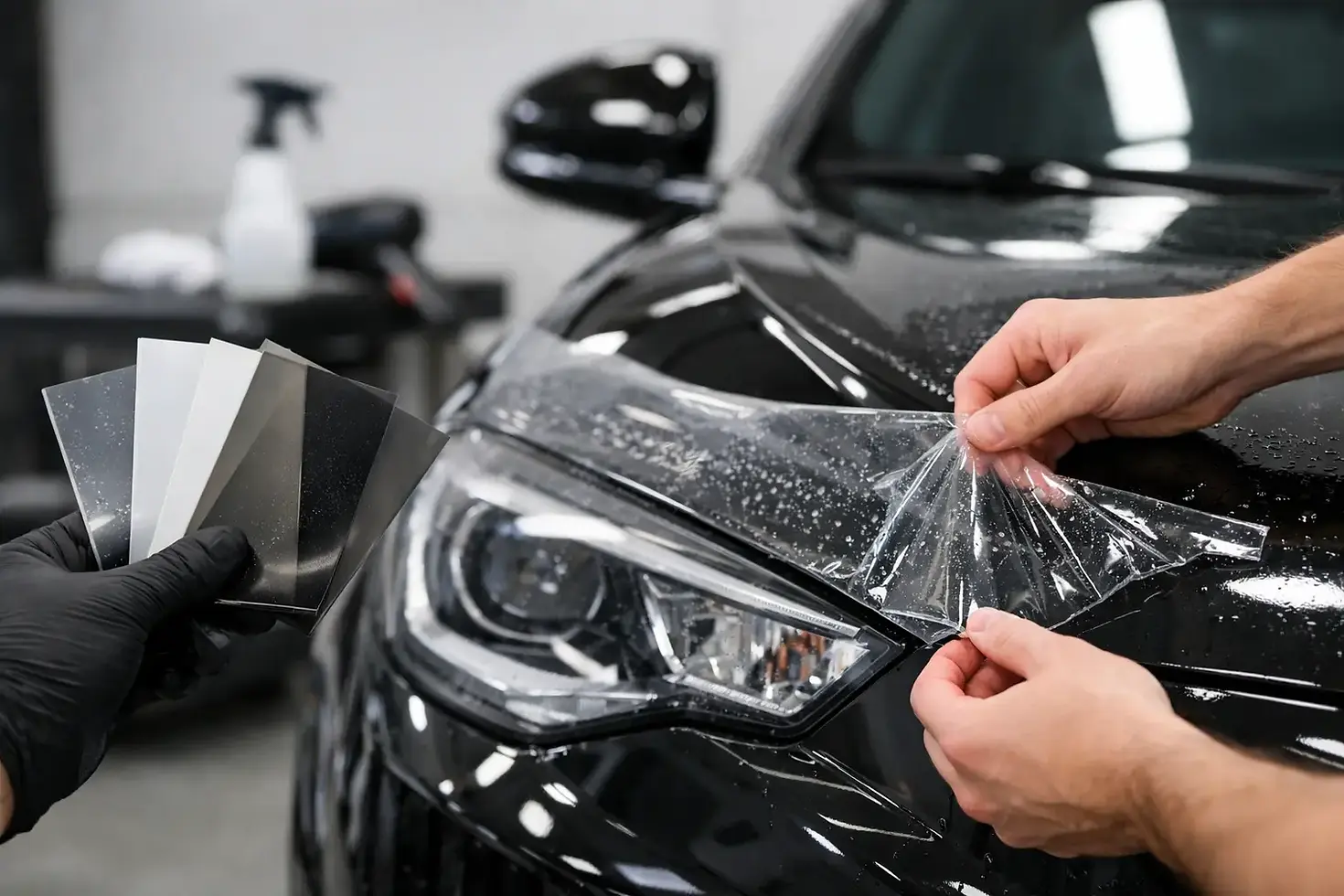
Start with the film itself. Modern high-end PPF should be TPU-based, not older PVC-style material that is more prone to yellowing, cracking, and looking dated over time. TPU film is known for better flexibility, impact resistance, and a cleaner finish. If the film also includes an elastomeric top coat, that is where you get the self-healing behavior owners want - the ability for fine swirls and surface marring to relax out with heat.
Clarity matters just as much as toughness. Some films protect well but slightly mute metallic flake or create more orange peel than the factory paint already has. On a white daily driver, that may not bother you. On a black Tesla, a deep blue luxury SUV, or any vehicle with sharp body lines and glossy panels, it usually does. A strong film should disappear visually once installed, not advertise itself.
Hydrophobic performance is another detail worth paying attention to. Some films shed water, road film, and grime more effectively than others, which makes washing easier and helps the vehicle stay cleaner between details. That does not replace maintenance, but it does improve day-to-day ownership.
Coverage matters more than most owners realize
One of the biggest mistakes people make when deciding how to choose paint protection film is focusing only on the brand of film and ignoring where it will be installed. Coverage should match how you use the vehicle.
If your car sees mostly city driving and you want protection where damage starts first, a partial front package may be enough. That usually targets the leading edge of the hood, front bumper, mirrors, and fenders. It costs less, but there is a visible transition line on some panels, and that trade-off matters more on darker paint.
A full front package is often the sweet spot for owners who want serious chip protection without wrapping the entire vehicle. It protects the full hood, full fenders, bumper, mirrors, and other high-impact areas so the front end wears evenly. For many daily drivers, luxury vehicles, and Teslas, this is the most balanced option.
Full-body PPF is the premium choice for people who want the most complete defense against chips, scratches, staining, and wash wear. It is especially worthwhile on high-value vehicles, soft paint systems, performance cars, and anything you intend to keep immaculate for years. It also makes sense if you regularly drive highways, gravel roads, or winter routes where sand and debris are constant.
There is no universal answer here. The right package depends on your budget, your mileage, your paint color, and how much visible wear you are willing to accept.
Ask where your car is actually vulnerable
Coverage decisions get better when they are practical. Look at your commute, your parking habits, and your vehicle design.
A low-slung sports car needs protection in different areas than a truck. A Tesla with a broad front fascia and large rocker areas can benefit from strategic coverage beyond the bumper and hood. If you haul kids, golf clubs, dogs, or gear, the rear bumper top ledge may deserve protection too. If your windshield or panoramic roof sees frequent road use, TPU film protection for those surfaces may also be worth discussing.
Installation quality is where the result is won or lost
You can choose an excellent film and still end up with a poor outcome if the installation standards are weak. This is where serious owners should slow down.
A premium install is not just about laying film on paint. It is about pattern accuracy, panel prep, edge treatment, contamination control, and how the vehicle is handled during the process. If prep is rushed, debris gets trapped. If edges are not wrapped or positioned correctly, lifting becomes more likely. If the shop cuts directly on the vehicle without discipline, there is risk to paint and trim.
Computer-cut factory-spec patterns are one of the strongest signs of a disciplined process. They reduce unnecessary blade work on the vehicle and allow for more consistent fitment across complex panels. That should be paired with meticulous paint preparation, because film locks in what is underneath it. If the paint has bonded contamination, swirl marks, or light defects, those issues can remain visible after installation unless they are corrected first.
This is also why the cheapest quote is rarely the best value. Lower pricing often shows up later as misaligned seams, silvering, dirt under the film, trimmed edges that do not sit cleanly, or patterns that leave too much exposed paint near impact zones.
What to ask before you commit
When comparing shops, ask what film they use, what warranty backs it, whether patterns are computer-cut, and how they prep the paint before installation. Ask who is installing it and whether they regularly work on your vehicle type. Tesla owners in particular should look for a studio that understands brand-specific fitment, trim sensitivity, and handling precautions.
You should also ask how the shop approaches honest recommendations. A quality studio will not push full-body coverage on every customer. They should explain trade-offs clearly and help you choose based on your goals, not their upsell target.
Finish options are about more than looks
Most people picture PPF as clear gloss film, but that is only part of the category. If you are learning how to choose paint protection film, think about the finish you want the vehicle to have after installation.
Gloss PPF is ideal when your goal is to preserve factory paint with maximum depth and a showroom appearance. On a new vehicle, it keeps the original character intact while adding self-healing protection.
Matte or satin PPF changes the visual presentation while still protecting the paint underneath. That can be a strong option if you want a more custom look without committing to permanent paint changes. Color-change PPF goes even further by combining aesthetic transformation with the impact resistance and surface protection owners expect from premium film.
The trade-off is simple. The more specialized the finish, the more important installer experience becomes. A color-change or satin install leaves less room for pattern, tension, or alignment mistakes.
Warranty matters, but so does realism
A strong warranty is part of a premium package, but it should support quality, not distract from weak workmanship. Look for coverage against yellowing, cracking, bubbling, and delamination. Then ask what maintenance is required to keep that warranty valid.
Be realistic about what PPF can and cannot do. It is excellent against road debris, light abrasion, bug splatter, and daily wear. It is not a force field against deep gouges, severe impacts, or neglect. If you drag cargo across a bumper edge or leave contaminants baking on the surface for weeks, the film can still suffer. Good guidance from the installer should include clear care expectations.
The best choice is the one that fits your ownership plan
If you trade vehicles every two years, your ideal package may look different from someone preserving a weekend car for the next decade. If your vehicle is a high-end daily driver, you may prioritize front-end defense and easy maintenance. If it is your pride-and-joy build, you may care more about complete coverage, edge refinement, and optical clarity.
That is why the smartest way to choose PPF is not asking for the cheapest package or the most expensive one. It is asking which film, which coverage, and which installer will keep your vehicle looking the way you want for as long as you own it.
At Optyx Auto Studio, that conversation starts with honest guidance, not pressure. No upsells, no shortcuts - just precision protection built around the way you drive and the standard you expect.
Choose the film that protects the finish you paid for, and choose the installer with the discipline to make it look like it was never there.


Comments