
Paint Protection Film Explained: Preserve Luxury Finishes

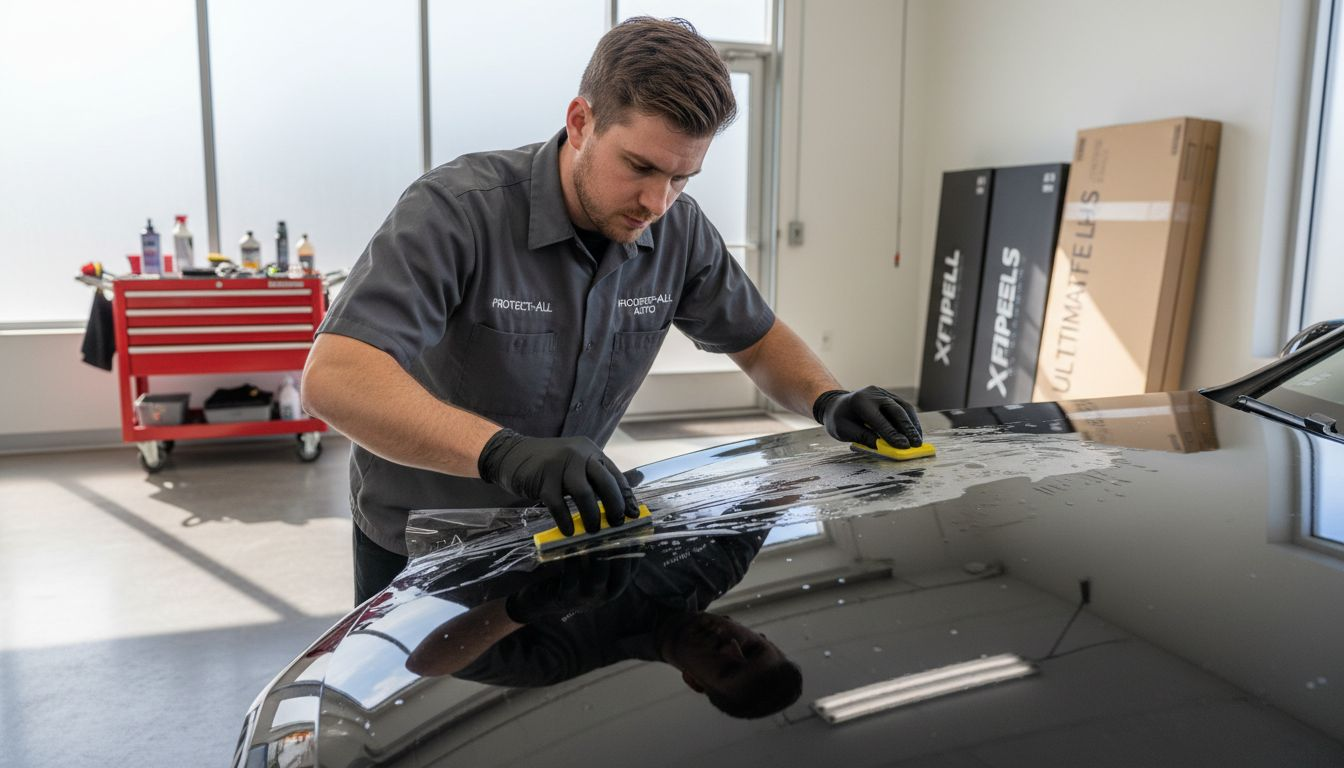
Luxury vehicles turn heads on every Spokane street, but every drive means facing gravel, icy debris, and relentless UV rays that threaten your flawless finish. Protecting that shine matters because even a single chip or scratch can diminish your car’s value and beauty. Discover how a clear, thin polymer shield provides invisible, advanced defense against local hazards, preserving your investment and keeping your car looking showroom new for years to come.
Table of Contents
Key Takeaways
Point | Details |
Protection Mechanism | Paint protection film absorbs impacts from road debris and environmental contaminants, keeping your vehicle’s paint pristine. |
Types of Films | Choose between Polyurethane, Polyester, and Hybrid films based on flexibility, chemical resistance, and self-healing capabilities. |
Professional Installation | Ensure installation is done by certified professionals to avoid issues like bubbling or peeling that compromise film performance. |
Cost and Value | Investment in PPF can save on expensive paint repairs and maintain your vehicle’s resale value over time. |
What Paint Protection Film Actually Is
Paint protection film is a clear, thin polymer shield that bonds directly to your vehicle’s paint surface. Think of it like an invisible suit of armor for your car. The film provides physical protection against scratches, rock chips, bird droppings, and environmental contaminants that degrade luxury finishes. Most formulations use polyurethane or similar flexible materials engineered to absorb impacts without transferring damage to the underlying paint.
The magic is in how it works. When a chip or scratch would normally hit your paint, it hits the film first instead. The film absorbs that damage, then the underlying paint remains pristine. Your vehicle looks exactly as it did when it left the factory, just with an invisible protective layer on top.
Unlike traditional paint protection methods, PPF functions as a surface coating that conforms perfectly to your car’s contours and curves. It’s applied through a lamination process where thin polymer sheets are carefully adhered to painted surfaces. The film is so thin and transparent that most people can’t tell it’s there, yet it handles the real world punishment that would otherwise destroy your finish.
Many high-end PPF products include self-healing properties. Minor scratches and swirl marks actually disappear as the film responds to heat and friction. This means your protection gets better over time rather than wearing down.
If you’re wondering what the different options look like, there are distinct types of PPF available, each with different clarity levels, thickness, and durability ratings. The right choice depends on your vehicle and how much protection you want.
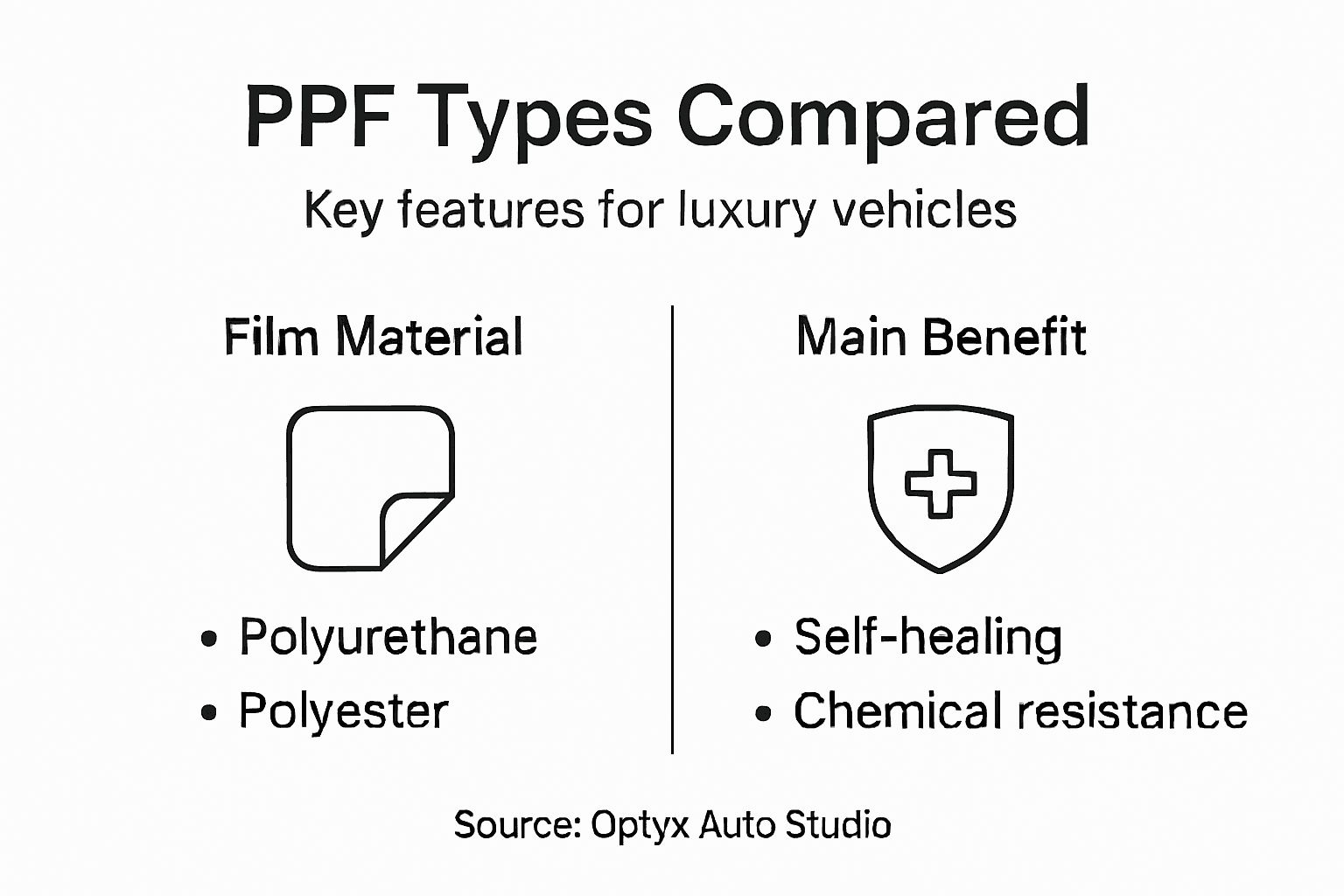
Pro tip: The best time to install PPF is immediately after purchasing your luxury vehicle or after professional paint correction, before any environmental damage accumulates on the fresh finish.
Major Film Types and Their Differences
Not all paint protection films are created equal. The type you choose affects how your luxury vehicle stays protected and how the film performs over time. Understanding the main categories helps you pick the right solution for your car’s specific needs.
Polyurethane Films
Polyurethane-based films dominate the PPF market for good reason. These films provide high impact resistance and excellent scratch protection with built-in self-healing properties. When your car takes a hit from road debris, polyurethane absorbs that impact without cracking or peeling. The elasticity means the film flexes with your vehicle’s body panels, maintaining a seamless appearance.
Polyurethane also handles temperature changes gracefully. Whether you’re driving through Spokane’s cold winters or hot summers, this film expands and contracts without losing adhesion. Self-healing technology means minor scratches vanish with heat exposure, keeping your finish looking showroom fresh.
Polyester Films
Polyester films take a different approach. They’re stiffer and more chemically resistant than polyurethane, making them excellent at handling harsh environmental conditions. However, polyester films are less flexible and don’t self-heal like their polyurethane counterparts.
Think of polyester as the tank versus polyurethane as the agile fighter. Polyester won’t bend as much, so it works better on flat surfaces. It resists chemical damage from road salt, bird droppings, and tree sap with superior durability, but the reduced flexibility means it’s not ideal for curved hood panels or complex body contours.
Hybrid Coatings
Hybrid films combine the best traits of both worlds. They merge polyurethane’s flexibility with polyester’s chemical resistance, creating a balanced option for luxury vehicles. These advanced formulations vary in thickness and clarity, offering specialized durability for different environmental exposures.
The right choice depends on your vehicle’s contours, your driving environment, and what threats you prioritize. Curved sports cars benefit from maximum flexibility. Daily drivers in harsh climates benefit from chemical resistance.
Here’s a comparison of the main paint protection film types to help you decide which is right for your vehicle:
Type of Film | Flexibility on Curves | Chemical Resistance | Self-Healing Ability |
Polyurethane | Excellent—fits curves | Moderate | Yes, with heat |
Polyester | Limited—best on flats | Very high | Not available |
Hybrid | Good—adapts to shapes | High | Limited or partial |
Pro tip: Ask your PPF installer which film type they recommend based on your specific vehicle model and Spokane driving conditions, as curved surfaces like hoods and fenders typically require maximum flexibility for seamless results.
How PPF Protects Your Car’s Finish
Paint protection film works like a bodyguard for your car’s paint. Every time road debris, bird droppings, tree sap, or UV rays would normally damage your finish, the film takes the hit instead. Your original paint stays untouched underneath.
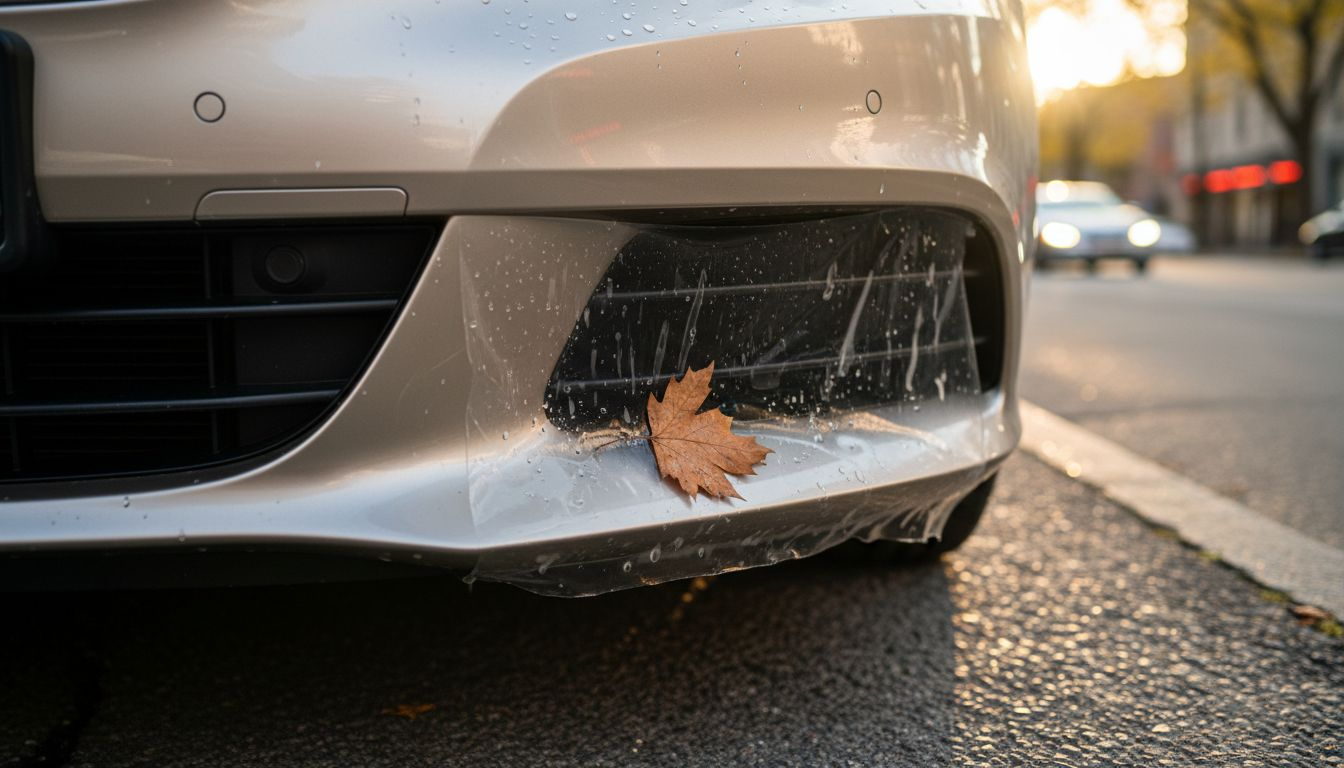
The key to PPF’s protection lies in energy absorption. When a rock chip or scratch would slam into your paint, the film absorbs that energy and prevents the damage from reaching the surface beneath. The polyurethane composition stretches and flexes rather than cracking, so the impact dissipates without transferring force to your paint.
Think about what happens to your car over time without PPF. UV rays slowly oxidize the clear coat, turning your brilliant finish into a dull haze. Road salt in winter creates corrosion. Bug splatter and tree sap eat through the protective layers. A small chip from a passing truck becomes a rust spot within months. PPF stops all of this at the source.
The Sacrificial Barrier Concept
PPF is sacrificial, meaning it degrades so your paint does not. After years of protection, the film may show some yellowing or minor wear. Your paint underneath? Still pristine. This is intentional design. You replace the film every 7 to 10 years, and your original finish looks brand new.
UV and Chemical Protection
The film resists UV degradation, maintaining clarity and effectiveness with minimal maintenance required. This matters for Spokane’s intense sunny days and cold winters. While your car’s paint would fade and chalk in that climate, PPF preserves the vibrant color you paid for.
Contaminants like road salt, brake dust, and industrial fallout cannot bond to the film the way they bond to paint. When contaminants do accumulate, they wash off easily. Your actual paint finish stays protected from permanent chemical damage.
Maintaining Your Protected Finish
PPF reduces your detailing workload significantly. You still wash and maintain your car normally, but you’re protecting a shield rather than exposing raw paint to the environment. This approach keeps your luxury vehicle looking showroom fresh while requiring far less intensive restoration work down the line.
Pro tip: Apply PPF immediately after professional paint correction or detailing, not months later, to maximize the protection of your freshly restored finish before any new environmental damage accumulates.
Professional Installation Standards and Techniques
PPF installation is not a DIY project. The difference between amateur and professional work shows immediately, and poor installation can actually damage your paint or result in visible edges, bubbles, and premature peeling. Professional installers follow strict standards that protect both your vehicle and the film’s performance.
The process begins with meticulous surface preparation. Your car gets washed thoroughly, then clay barred to remove embedded contaminants invisible to the naked eye. Any paint imperfections get polished or corrected before the film touches the surface. A contaminated surface means the film won’t adhere properly, leading to failure months later.
Clean Environment Requirements
Professional installation requires cleanroom like conditions to prevent dust and debris from embedding under the film. A single speck of dust trapped between film and paint creates a visible imperfection that won’t disappear. This is why quality shops invest in controlled installation bays with filtered air systems.
Temperature and humidity also matter. Too cold and the film won’t stretch properly. Too humid and water gets trapped. Professional installers maintain strict environmental controls throughout the entire application process.
Installation Techniques
Wet installation methods use slip solutions that allow the installer to reposition the film before it sets. This prevents costly mistakes. Heat guns activate the film’s memory, allowing it to conform smoothly to complex curves, hood peaks, and fender contours without stretching or tearing.
Specialized squeegees push out air bubbles while working the film into tight corners and edges. Every edge gets sealed properly to prevent lifting or peeling. This precision work separates a seamless installation from one where you can see the film’s boundaries.
Inspection and Certification
Reputable installers verify adhesion and finish quality after application. They check for bubbles, wrinkles, and edge imperfections before handing the vehicle back to you. Proper training and manufacturer certification ensure your car receives installation that meets warranty standards.
Optyx Auto Studio’s certified installers bring over 35 years of combined experience to every project, using precision techniques that minimize visible film edges and deliver flawless results on luxury finishes.
Pro tip: Request that your installer perform a final walk around inspection with you under bright lighting to identify any bubbles or imperfections before you drive the vehicle home.
Real Cost Factors and Maintenance Tips
PPF costs vary significantly based on your vehicle’s size, complexity, and the film quality you choose. A compact sedan might run $1,500 to $3,000 for full coverage, while a luxury SUV or sports car with complex curves can reach $5,000 to $8,000 or more. These numbers reflect professional labor, premium materials, and the precision required for flawless installation.
Yes, it’s an investment. But consider what you’re protecting. A full paint correction on a luxury vehicle costs $2,000 to $5,000. A single deep scratch or chip repair runs $500 to $1,500. PPF prevents these costs entirely while maintaining your vehicle’s resale value. Most luxury car owners recoup the PPF investment through better depreciation and avoided repairs.
Here’s a summary of real-world PPF costs and what drives them:
Vehicle Type | Typical Full Coverage Cost | Key Price Factor | Average PPF Lifespan |
Compact Sedan | $1,500 – $3,000 | Simple panels, less labor | 7–10 years |
Luxury SUV | $5,000 – $8,000+ | Complex curves, large area | 7–10 years |
Sports Car | $5,000 – $8,000+ | Intricate shapes, expertise | 7–10 years |
What Affects the Price
Film type matters most. Premium self-healing polyurethane costs more than basic polyester but lasts longer and performs better. Vehicle size is obvious, but installation complexity is the real cost driver. Intricate designs, split hood lines, and curved fenders take more time and skill. A sleek sports car costs more than a boxy SUV with flat panels.
Labor rates vary too. Professional shops in Spokane have different overheads and expertise levels. Quality matters. Cheap installation creates problems that cost more to fix later.
Maintenance Keeps Your Investment Working
Regular washing with pH-neutral soaps keeps your film performing optimally. Use soft microfiber cloths and avoid aggressive scrubbing. Never use high pressure washers directly on film edges, as they can cause lifting and water intrusion.
Avoid harsh chemicals, waxes, and abrasive polishes unless the film manufacturer recommends them. Bird droppings, tree sap, and road tar need prompt removal, but use gentle methods. Regular inspections catch lifted edges early before water damage occurs.
The Long Game
PPF typically lasts 7 to 10 years with proper care. That’s a decade of protection without worrying about every pothole or parking lot mishap. When it finally needs replacement, your original paint looks showroom fresh underneath.
This protection extends your vehicle’s useful life and keeps it looking pristine when you eventually sell or trade it. That luxury finish stays brilliant.
Pro tip: Schedule a professional PPF inspection every two years to catch any edge lifting or adhesion issues before they become costly problems requiring full film replacement.
Protect Your Luxury Finish with Expert Paint Protection Film from Optyx Auto Studio
The challenges of preserving your vehicle’s pristine paint are clear. From rock chips and scratches to environmental hazards like UV rays and road salt, your car’s finish faces constant threats. This article explains how paint protection film acts as an invisible shield that absorbs damage and self-heals to keep your paint flawless. But achieving that perfect, seamless layer requires expert knowledge, precision installation, and premium materials.
At Optyx Auto Studio, we understand the importance of protecting your investment with detailed care. Our certified installers specialize in premium paint protection film applications that conform flawlessly to your vehicle’s curves, minimizing visible edges and maximizing durability. We use top-tier films with self-healing technology tailored to your exact needs. Plus, with over 35 years of combined experience in automotive restyling and protection, we offer comprehensive solutions that complement PPF, including ceramic coatings and paint correction to enhance and preserve your finish.
Experience the difference that professional application and elite products can make for safeguarding your luxury vehicle today.
Discover our tailored services for flawless protection.
Explore our paint protection services
Ready to keep your car looking showroom fresh for years? Contact Optyx Auto Studio now for a consultation and let our experts provide the ultimate defense for your vehicle’s finish with professional paint protection film installation.
Frequently Asked Questions
What is paint protection film (PPF)?
Paint protection film is a clear, thin polymer shield, typically made of polyurethane, that bonds to your vehicle’s paint surface to protect it from scratches, rock chips, bird droppings, and other environmental contaminants.
How does paint protection film work to protect my vehicle’s finish?
PPF absorbs impacts from debris, preventing damage from reaching your car’s paint. It acts as a sacrificial layer that degrades over time instead of the original paint, ensuring your vehicle maintains its showroom appearance.
What are the different types of paint protection film available?
The main types of PPF include polyurethane films, which offer excellent flexibility and self-healing properties, polyester films, which are stiffer and more chemically resistant, and hybrid films that combine benefits from both types for balanced protection.
How long does paint protection film last, and how do I maintain it?
PPF typically lasts between 7 to 10 years with proper care. Regular washing with pH-neutral soaps, gentle removal of contaminants, and avoiding harsh chemicals help maintain the film’s effectiveness and appearance.
Recommended


Comments