
Why Choose Paint Correction for Lasting Vehicle Beauty

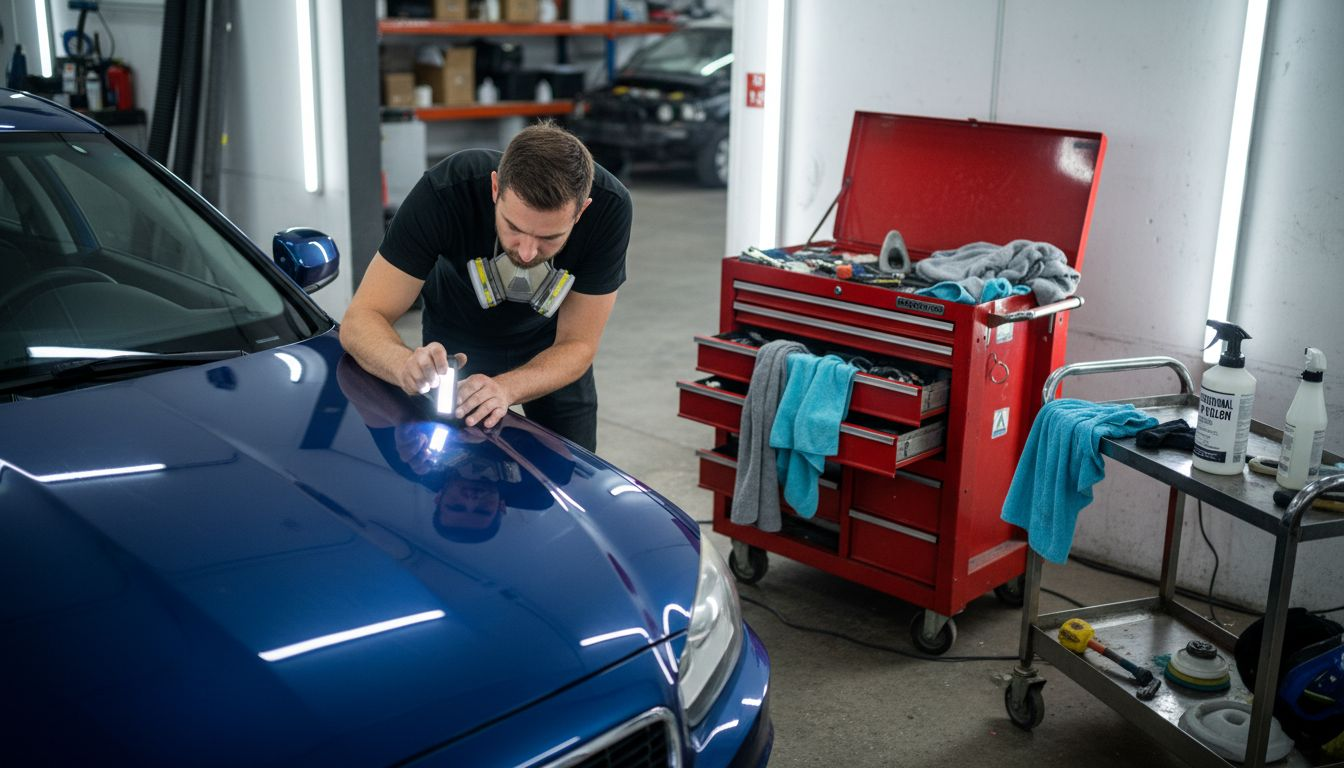
Most American luxury vehicles lose up to 40 percent of their visual appeal from swirl marks and light scratches over time. For Spokane owners who value their car’s pristine look and market value, these imperfections are more than just cosmetic issues. Understanding what paint correction truly involves debunks common myths and shows how expert care can dramatically restore your car’s finish while safeguarding your investment.
Table of Contents
Key Takeaways
Point | Details |
Understanding Paint Correction | Paint correction is a professional technique that enhances a vehicle’s appearance by removing surface imperfections without damaging the original paint. |
Importance of Skilled Professionals | Always choose certified detailers with proven experience to minimize risks and ensure effective restoration results. |
Economic Benefits | Regular paint correction can preserve and potentially increase a vehicle’s resale value by maintaining its appearance. |
Preparation for Protection | Paint correction should be viewed as a preparatory step before applying protective treatments to optimize effectiveness and durability. |
Defining Paint Correction and Common Myths
Paint correction is a sophisticated automotive detailing technique designed to restore and enhance a vehicle’s paintwork by systematically removing surface imperfections. Complex surface restoration techniques involve precision polishing that eliminates swirl marks, light scratches, oxidation, and minor etching without compromising the original paint layer.
Contrary to popular misconceptions, paint correction is not exclusively for showroom vehicles or car enthusiasts. Professional detailers use specialized abrasive compounds and polishing tools to carefully eliminate microscopic paint defects, dramatically improving the vehicle’s visual clarity and depth. The process requires extensive skill and professional-grade equipment to ensure the paintwork is restored without causing additional damage.
The most prevalent myths surrounding paint correction include beliefs that it permanently fixes all paint damage or that the process will thin or harm the vehicle’s original finish. In reality, professional paint restoration techniques can significantly improve paint appearance by carefully removing a minimal layer of clear coat to eliminate surface imperfections. Skilled technicians understand the delicate balance between correction and preservation, ensuring that only a microscopic amount of material is removed during the process.
Pro tip: Always select a certified professional with proven experience in paint correction to ensure the best results and minimize potential risks to your vehicle’s finish.
Types of Paint Correction Services Explained
Automotive paint correction encompasses several specialized techniques designed to address different levels of paint imperfections. Systematic paint restoration approaches range from light polishing to intensive multi-stage corrections that can dramatically transform a vehicle’s appearance.
The primary categories of paint correction services include single-stage polishing, which targets minor surface blemishes, and multi-stage polishing for more comprehensive paint restoration. Single-stage services typically involve light machine polishing to remove light swirl marks and minor oxidation. Multi-stage corrections are more intensive, involving progressively finer polishing compounds to address deeper scratches, significant oxidation, and more complex paint defects.
Professional paint correction techniques utilize different methods depending on the vehicle’s specific paint condition. Machine polishing offers more consistent and precise results compared to traditional hand polishing. Professional detailers typically employ specialized rotary or dual-action polishers with varying pad types and abrasive compounds to achieve optimal paint restoration. These techniques allow for targeted correction of specific paint imperfections while preserving the vehicle’s original clear coat.
Pro tip: Request a detailed paint assessment before services to understand the most appropriate correction method for your specific vehicle’s condition.
How Paint Correction Restores Vehicle Finish
Paint correction is a meticulously scientific process that breathes new life into a vehicle’s exterior by systematically addressing surface imperfections. Paint restoration techniques involve carefully removing microscopic layers of clear coat where damage and oxidation have accumulated, revealing the pristine paint beneath.
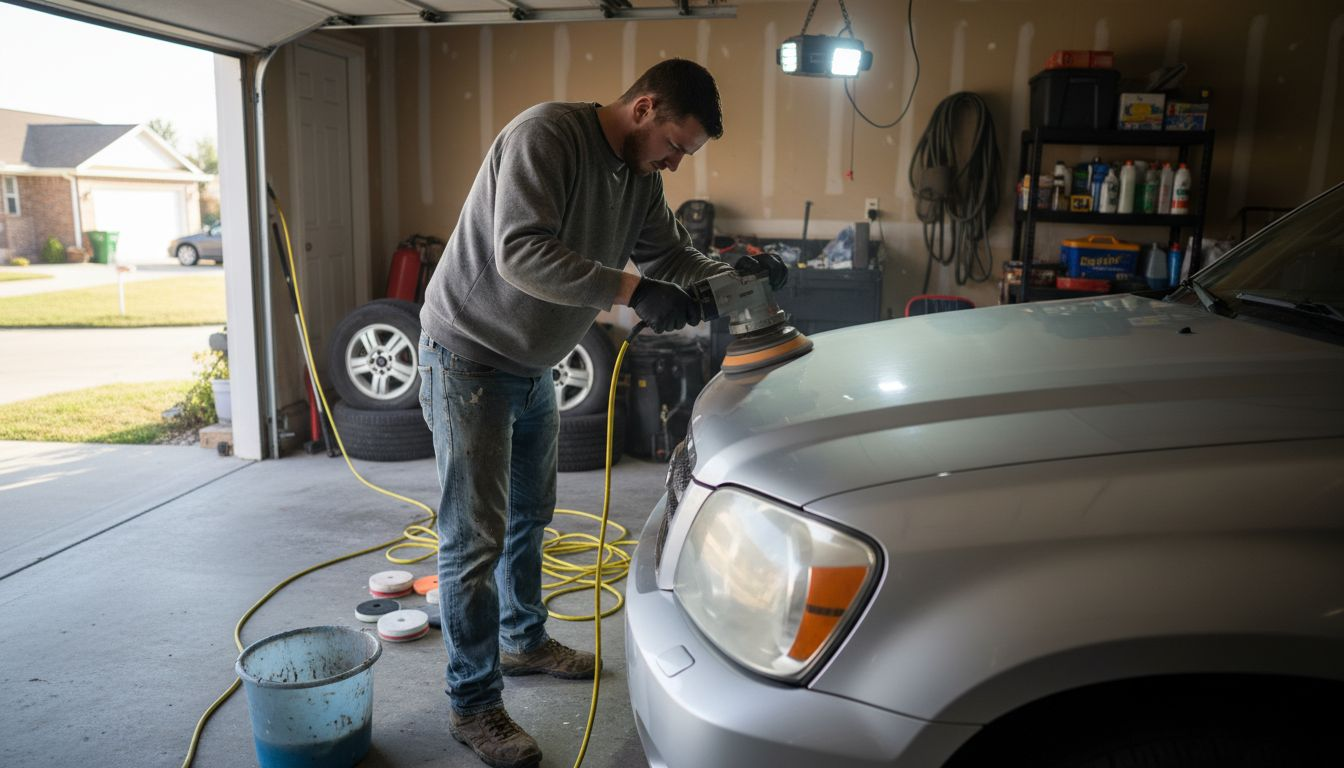
The restoration process works by using specialized abrasive compounds and precision polishing tools that gradually smooth out surface irregularities. Professional detailers employ a strategic approach, starting with more aggressive compounds to address deeper scratches and gradually transitioning to finer polishing materials that enhance the paint’s clarity and depth. This methodical technique allows for the removal of swirl marks, light scratches, water spots, and oxidation while preserving the vehicle’s original paint thickness.
Scientific paint examination techniques reveal that paint correction is more than a cosmetic procedure. It is a complex process that not only improves visual appearance but also helps protect the vehicle’s paint from further degradation. By removing damaged surface layers, the correction process creates a smoother, more reflective surface that is more resistant to future environmental contaminants and helps maintain the vehicle’s original protective clear coat.
Pro tip: Request a professional paint depth measurement before correction to ensure the safest and most effective restoration process for your specific vehicle.
Benefits for Aesthetics, Value, and Longevity
Automotive paint restoration transforms a vehicle’s appearance by eliminating surface imperfections that dull and degrade the paint’s original brilliance. This meticulous process goes far beyond simple cosmetic enhancement, delivering profound benefits that impact the vehicle’s visual appeal, market value, and long-term protection.
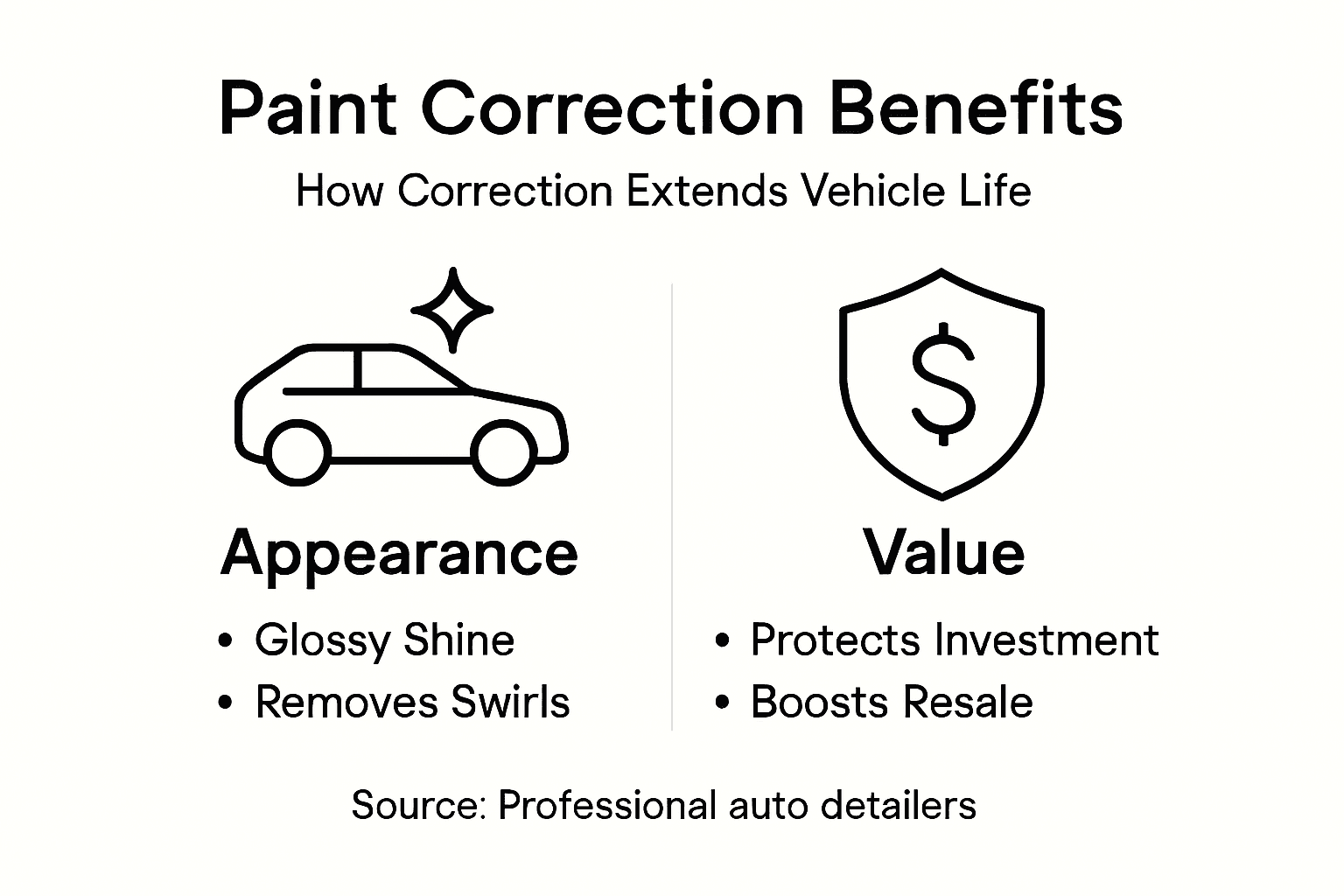
The aesthetic improvements are immediately apparent, with corrected paint revealing a deep, glossy finish that reflects light dramatically and restores the vehicle’s showroom-like appearance. Professional paint correction removes swirl marks, light scratches, and oxidation, creating a smooth surface that looks vibrant and pristine. This visual transformation not only makes the vehicle look newer but also signals to potential buyers that the car has been meticulously maintained.
Paint correction techniques provide substantial economic benefits by preserving and potentially increasing the vehicle’s resale value. A well-maintained exterior can significantly influence a potential buyer’s perception, often translating into higher market value. Moreover, by removing contaminants and preventing further paint degradation, the correction process acts as a preventative maintenance strategy that can help vehicle owners avoid costly repaints and extensive bodywork in the future.
Pro tip: Schedule periodic paint correction assessments to maintain your vehicle’s aesthetic quality and protect your automotive investment.
Comparing Paint Correction to Other Options
Paint protection strategies offer multiple approaches to vehicle finish maintenance, each with unique characteristics and benefits. Paint correction stands distinctly apart from protective treatments like waxes, sealants, and paint protection films by focusing on restoring the existing paint surface rather than adding a new protective layer.
Whereas paint protection films create a physical barrier against scratches and environmental damage, and ceramic coatings provide a hydrophobic shield, paint correction is a restorative process that addresses existing surface imperfections. This technique methodically removes microscopic layers of damaged clear coat, eliminating swirl marks, light scratches, and oxidation to reveal a smooth, reflective finish that serves as an ideal foundation for subsequent protective treatments.
Automotive paint maintenance options can be viewed as complementary rather than competing strategies. Paint correction essentially prepares the surface for optimal protection, creating an ideal canvas for waxes, sealants, or ceramic coatings. While other methods add a protective layer on top of the existing paint, correction fundamentally improves the paint’s condition, ensuring that any subsequent protective treatment adheres more effectively and looks significantly more refined.
Pro tip: Consider paint correction as a crucial preparatory step before applying any long-term protective coating to maximize your vehicle’s aesthetic and protective potential.
Here’s a comparison of paint correction and protective coating options:
Method | Purpose | Durability | Typical Cost Range |
Paint Correction | Removes defects, restores finish | Medium term (needs upkeep) | $300-$1,500+ (varies) |
Protective Wax/Sealant | Adds shine, mild protection | Short term (weeks/months) | $50-$200 |
Ceramic Coating | Provides hydrophobic protection | Long term (years) | $500-$2,000+ |
Paint Protection Film | Shields against chips/scratches | Very long term (5-10 years) | $1,200-$5,000+ |
Typical Costs, Risks, and Avoidable Mistakes
Paint correction expenses vary dramatically based on vehicle size and condition, typically ranging from several hundred to over a thousand dollars. Small sedans might require minimal correction at lower price points, while luxury vehicles or those with extensive paint damage can demand more comprehensive and expensive treatments.
Professional paint correction involves significant technical risks that inexperienced detailers might not recognize. Potential complications include irreversible clear coat damage from overly aggressive polishing techniques, using incorrect abrasive compounds, or applying inappropriate pressure during the correction process. Thin or aged paint is particularly vulnerable, and improper correction can remove too much clear coat material, permanently compromising the vehicle’s finish.
Chemical safety in paint correction requires careful consideration of health and environmental risks. Professional detailers must utilize proper ventilation, wear appropriate personal protective equipment, and follow strict product usage guidelines to prevent harmful vapor inhalation or skin contact. Environmental regulations also mandate proper disposal of polishing compounds and contaminated materials to minimize potential ecological impact.
Pro tip: Always request a comprehensive paint depth assessment and detailed correction plan before authorizing any paint correction services to minimize potential risks and unexpected expenses.
Below is a summary of common paint correction risks and how to avoid them:
Risk | Cause | Prevention Tip |
Clear coat thinning | Excessive polishing | Measure paint depth beforehand |
Surface haze | Wrong compound selection | Use professional-grade materials |
Health hazard (chemical exposure) | Poor ventilation/gear | Use PPE and proper ventilation |
Environmental impact | Improper waste disposal | Follow disposal regulations |
Elevate Your Vehicle’s Beauty with Expert Paint Correction and Protection
If you have discovered how paint correction can remove swirl marks, oxidation, and light scratches to restore your vehicle’s finish, then you know the importance of choosing a trusted professional to deliver these complex restoration techniques. At Optyx Auto Studio, we specialize in precision paint correction that carefully removes imperfections while preserving your original clear coat. Our certified installers use advanced tools and premium products to reveal deep, glossy shine that lasts.
Protecting your investment extends beyond correction. Combine our expert paint correction with top-tier ceramic coatings, paint protection film, or custom styling services to not only enhance your vehicle’s appearance but also shield it from future damage. Don’t wait until minor paint defects diminish your vehicle’s value and beauty. Visit Optyx Auto Studio today to schedule your comprehensive paint assessment and experience unmatched quality and care. Restore, protect, and transform your ride now.
Frequently Asked Questions
What is paint correction and how does it work?
Paint correction is an automotive detailing process that restores and enhances a vehicle’s paintwork by systematically removing surface imperfections such as swirl marks, light scratches, and oxidation. It involves using specialized abrasive compounds and polishing tools to eliminate these defects without damaging the original paint layer.
Is paint correction safe for my vehicle’s finish?
Yes, paint correction is safe when performed by a certified professional with experience. Skilled technicians understand the balance between correction and preservation, ensuring only a minimal layer of clear coat is removed during the process to protect the vehicle’s original finish.
How does paint correction differ from other paint maintenance options?
Unlike protective treatments like waxes or ceramic coatings that add a new layer on top of the existing paint, paint correction focuses on restoring the quality of the existing surface by removing imperfections. This makes it an essential preparatory step before applying any protective coating.
What are the potential risks of paint correction?
The main risks of paint correction include clear coat thinning due to excessive polishing, which can be avoided by measuring paint depth beforehand. Additionally, using incorrect compounds or techniques can cause surface haze or damage. Ensuring a professional performs the service minimizes these risks.
Recommended


Comments