
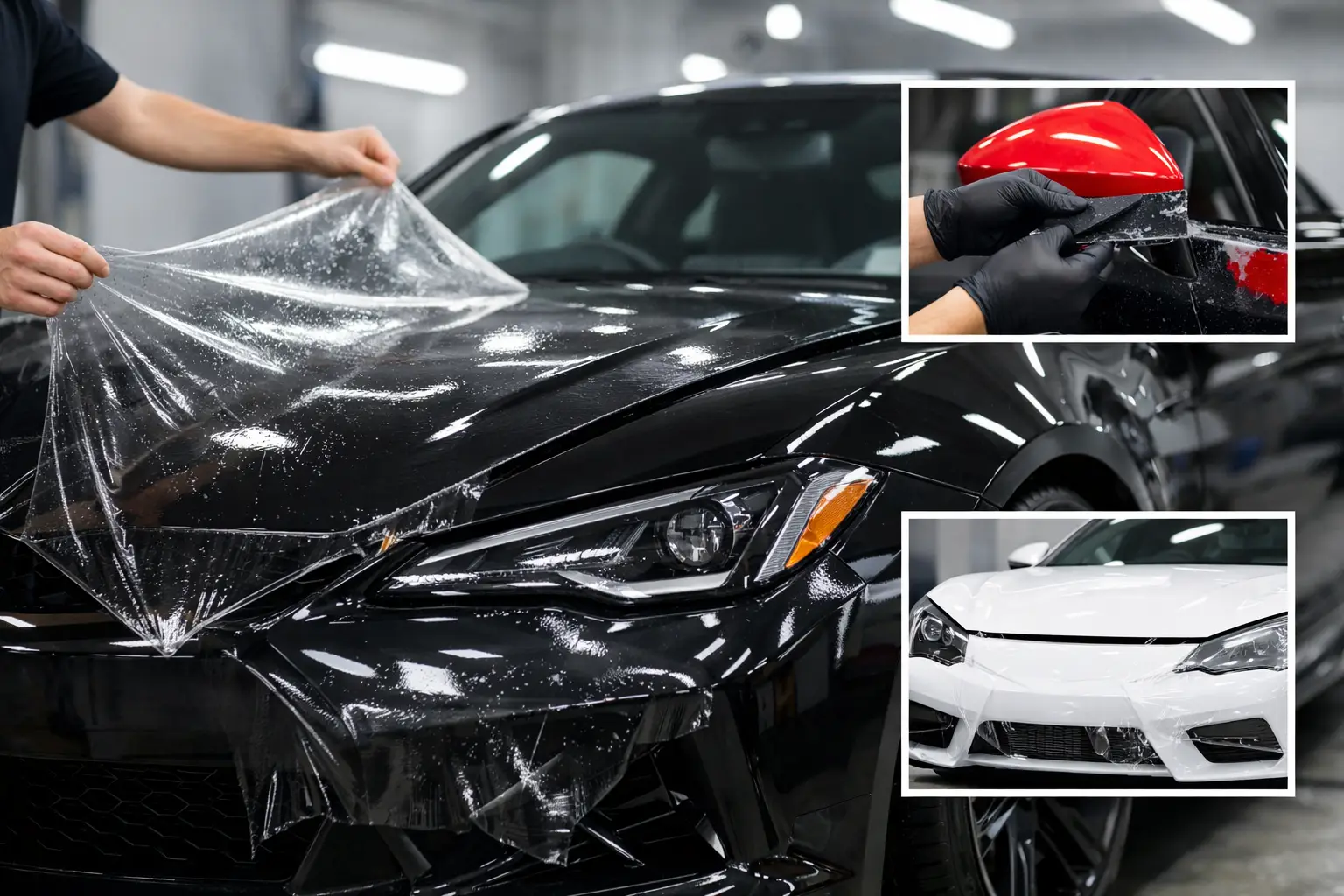
Best PPF Coverage Options Explained

A rock chip on the front bumper is annoying. A sandblasted hood, etched mirrors, and pitted fenders on a newer vehicle is expensive. That is why the best PPF coverage options explained clearly matters before installation starts - because the right package protects the areas your vehicle actually puts at risk, not just the areas that look good on a quote.
Paint Protection Film is not one-size-fits-all. Coverage should match how you drive, where you drive, what you drive, and how long you plan to keep it. A weekend sports car that rarely sees freeway miles needs a different strategy than a Tesla commuting year-round through Spokane and North Idaho roads, construction zones, gravel, snow, and road debris.
What PPF coverage really means
PPF coverage refers to how much of the vehicle is wrapped in protective film, not just whether film is installed at all. Premium TPU PPF is designed to absorb impact from road debris, resist staining, self-heal minor surface marks, and preserve the finish underneath. The difference between packages comes down to which painted surfaces are protected and where the film edges stop.
That stopping point matters more than most owners realize. A smaller package can protect against direct hits on the most exposed areas, but visible edges and unprotected transition zones may still leave portions of the panel vulnerable. A more complete package costs more upfront, yet it often delivers a cleaner appearance and stronger long-term value.
Best PPF coverage options explained by package type
Partial front coverage
Partial front PPF usually covers the leading section of the hood and fenders, plus the full front bumper and often mirrors. This is the entry point for owners who want defense against the most common chip zones without committing to a larger package.
It can work well on budget-conscious installs, older vehicles, or cars that do not see many highway miles. The trade-off is visible film lines across the hood and fenders, along with exposed paint above those coverage areas. On premium vehicles, that transition line is often the reason owners wish they had gone further.
Full front coverage
Full front coverage typically includes the entire hood, full fenders, front bumper, headlights, and mirrors. For many owners, this is the sweet spot between cost and meaningful protection. It addresses the surfaces that take the biggest beating from bugs, gravel, salt, and road spray.
For daily drivers, luxury SUVs, sports sedans, and Teslas, full front is often the most balanced recommendation. It keeps the entire front clip looking cleaner over time and avoids the cut-off line associated with partial kits. If you regularly drive I-90, spend time behind trucks, or want your vehicle to keep a showroom appearance, this is often the package that makes the most practical sense.
Track pack or high-impact add-ons
A track pack usually expands beyond the front end to include rocker panels, lower doors behind the wheels, A-pillars, a roof leading edge, and sometimes rear impact areas. Even if you never take your car to a track, these zones are common chip points on performance cars and vehicles with wider tires.
This option makes sense for owners who drive spiritedly, commute on debris-heavy roads, or own vehicles with aggressive body shapes that throw road rash along the sides. Tesla owners often benefit here because lower rear doors and rocker areas can take a surprising amount of abuse from tire spray and grit.
Full-body PPF
Full-body PPF covers virtually every painted surface. This is the top-tier option for owners who want the highest level of paint preservation and the cleanest, most uniform result. It is especially valuable for exotic cars, luxury vehicles, dark paint, soft paint systems, and anyone planning to keep a vehicle long term.
The obvious trade-off is price. Full-body protection is an investment, but it is also the closest thing to wrapping your factory finish in armor. For high-value vehicles, custom builds, and pristine daily drivers, it offers unbeatable protection against chips, light scratching, environmental fallout, and the wear that slowly pulls down resale appeal.
How to choose the right coverage for your vehicle
The best package depends less on what sounds premium and more on how your vehicle lives.
If your car is a commuter that sees highway driving every day, front-end coverage should be treated as the minimum serious consideration. Bumpers, hoods, mirrors, and fenders absorb the bulk of direct impact. If you also deal with gravel shoulders, winter grit, or frequent construction routes, rocker panels and lower doors deserve attention too.
If you own a weekend car that stays close to home and avoids harsh conditions, full front may still be enough. But if it is a performance model with wide tires, low ride height, or expensive paint, targeted side and rear impact areas can save the finish from repeated damage.
If your vehicle is new and you intend to keep it for years, it usually makes sense to protect it before damage starts. Paint correction can improve defects, but it does not replace prevention. Film performs best as a shield, not a bandage.
Best PPF coverage options explained for common owner goals
“I want the most value for the money”
Go with full front coverage. It protects the highest-risk painted surfaces, looks more refined than partial coverage, and prevents the kind of front-end wear that ages a vehicle fast.
“I want my vehicle to stay as close to perfect as possible”
Choose full-body PPF. If preserving original paint is the priority, this is the standard. It is especially smart for black paint, luxury finishes, and vehicles that are difficult or expensive to repaint correctly.
“I want protection, but I do not want to overspend”
Partial front can still be worthwhile, but only if expectations are realistic. It is basic impact protection, not comprehensive preservation. For many premium vehicles, the better long-term value is stepping up once instead of rethinking the decision later.
“I drive a Tesla”
Tesla paint protection often benefits from more than just the front bumper and hood. Rockers, lower rear doors, and other high-splash zones can take steady abuse. A tailored package often outperforms a generic menu option.
Coverage is only half the decision
Even the best package can underdeliver if the installation is rushed. Film quality, pattern accuracy, edge treatment, panel prep, and installation environment all matter. A premium TPU PPF with a self-healing elastomeric top coat should be paired with precision installation, clean panel preparation, and computer-cut patterns designed to fit factory specifications.
That is where the difference between a commodity install and a studio-grade install becomes obvious. Poor alignment, trapped contamination, exposed edges, and shortcuts around complex panels will always show up over time. Honest guidance matters here. Not every vehicle needs full-body film, but every vehicle deserves a recommendation based on use, not upselling.
When more coverage is worth it
There are a few situations where stepping up from a basic package is usually the right move.
If your paint color is dark, solid black, or especially difficult to keep flawless, more coverage pays off because scratches, chips, and swirl-prone areas become visible quickly. If your vehicle has large, flat front-end panels, every imperfection stands out more. If resale value matters, preserved original paint is a strong asset.
It is also worth expanding coverage when repainting would be costly or undesirable. Factory paint quality and consistency generally hold more value than repaired paintwork. Film helps keep it that way.
When a smaller package still makes sense
Not every owner needs maximum coverage. If the vehicle is older, already has cosmetic wear, or serves as a short-term daily driver, a focused front-end package may be enough. The key is being clear about the goal. If the objective is reducing future chips rather than maintaining a near-perfect finish, smaller coverage can absolutely be the right call.
That is the value of a no-upsells, no-shortcuts approach. Good advice is not about pushing the biggest package. It is about matching the protection level to the vehicle, the owner, and the real-world driving conditions.
A well-chosen PPF package should feel precise, not excessive. When the coverage matches the risk, your vehicle keeps its finish, its presence, and its value far longer than paint alone ever could. If you are deciding where to start, protect the areas your road miles attack first and build from there with intention.


Comments