
Paint Correction: Transforming Luxury Vehicle Aesthetics

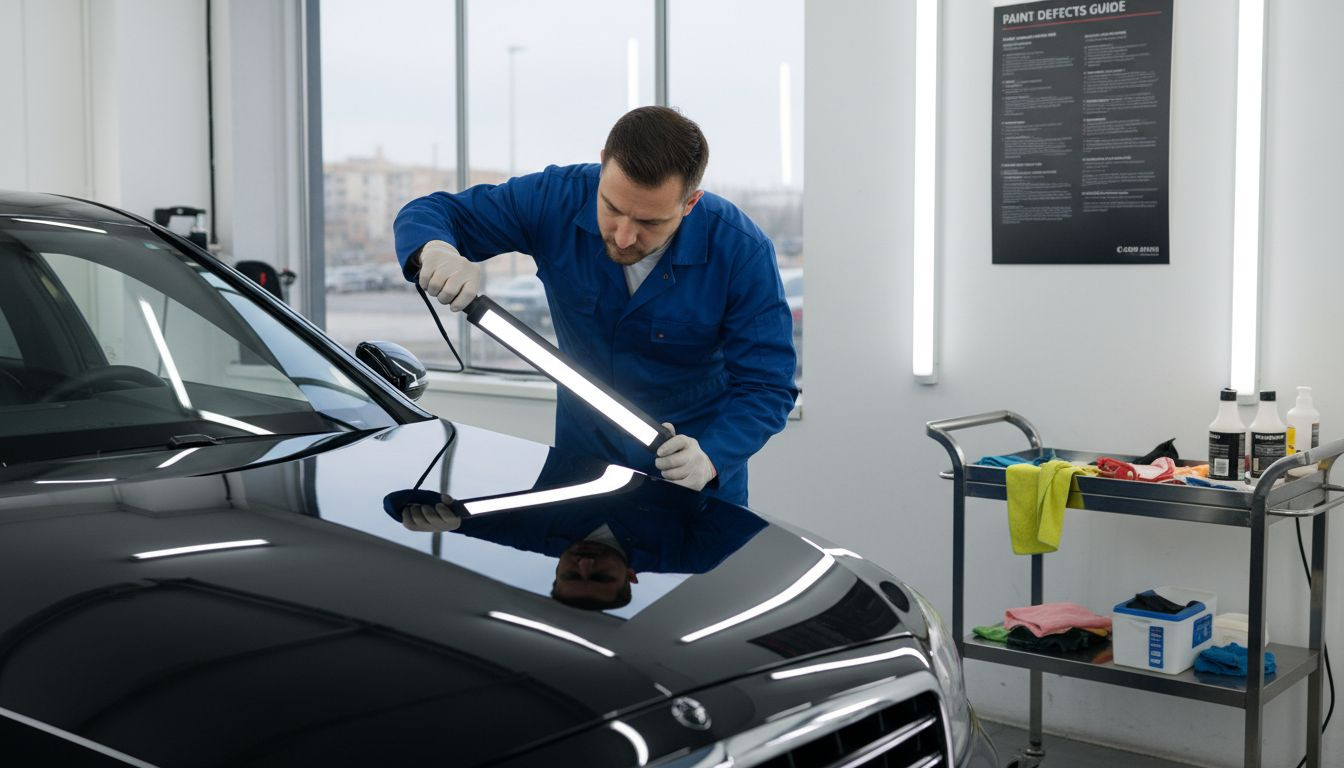
Luxury vehicle owners in Spokane know that even minor blemishes can dull the brilliance of a premium paint finish. A single drive through winter salt or a sunny Washington summer can leave behind swirls, scratches, and oxidation that simple washing will not fix. For these vehicles, paint correction restores and protects the multi-layered factory coatings using advanced techniques, ensuring lasting shine and maximum resale value. Discover how professional services maintain your car’s true elegance while safeguarding your investment.
Table of Contents
Key Takeaways
Point | Details |
Paint Correction is Essential for Luxury Vehicles | Proper paint correction addresses surface imperfections and ensures the longevity and appearance of luxury vehicle paint. |
Professional Correction Offers Value Preservation | Investing in professional paint correction protects resale value and maintains the vehicle’s aesthetic appeal. |
Understanding Common Paint Defects is Crucial | Being aware of different paint defects helps vehicle owners avoid costly mistakes in identifying and treating them. |
DIY Attempts Can Lead to Expensive Repairs | The risks associated with DIY paint correction often outweigh the potential savings, as mistakes can result in costly repainting. |
Paint Correction Defined for Luxury Vehicles
Paint correction is the process of restoring your luxury vehicle’s finish by removing or significantly reducing surface imperfections that have accumulated over time. Unlike simple washing or waxing, which sit on top of your paint, correction actually addresses the paint layer itself. Think of it this way: if your clearcoat is a piece of glass, scratches, swirls, and oxidation are like fingerprints and dust on that surface. Paint correction removes those marks to reveal the pristine finish underneath. For luxury vehicles, this distinction matters enormously. Your car’s paint system is engineered with precision. It typically consists of multiple layers including primers, basecoats, and protective clearcoats, and paint defects like scratches and swirls require specialized correction techniques to restore the finish while preserving the protective properties of the factory-applied coatings. This is not a DIY job you can tackle with compounds from an auto parts store.
The imperfections that paint correction addresses fall into several categories. Swirl marks appear as circular patterns, usually from improper washing or drying techniques. Scratches range from light surface marks that only affect the clearcoat to deeper ones that penetrate multiple layers. Water spots and etching occur when mineral deposits or acidic contaminants bond to your paint. Oxidation creates a dull, chalky appearance as the paint layer breaks down from UV exposure and environmental damage. For Spokane and surrounding area luxury vehicle owners, our climate presents specific challenges. Winter salt on roads, intense summer UV, and temperature fluctuations all contribute to paint degradation that demands professional correction. A skilled technician uses progressive polishing techniques, moving from more aggressive compounds to finer ones, carefully measuring paint thickness throughout the process to ensure nothing is removed beyond what’s necessary. Automotive paint systems on luxury vehicles require this meticulous approach because removing too much clear coat compromises both the appearance and your vehicle’s protection against future damage.
What separates professional paint correction from amateur attempts is understanding both the chemistry and the outcome you’re aiming for. A properly executed correction doesn’t just make your paint look better today; it prepares the surface for maximum effectiveness of protective treatments like ceramic coatings. When contaminants and imperfections are removed, a ceramic coating bonds more effectively to clean paint, providing superior water beading, chemical resistance, and longevity. Your luxury vehicle’s resale value depends significantly on paint condition. A deep scratch or heavy swirl marks visible under sunlight signals neglect to potential buyers, while flawlessly corrected paint demonstrates meticulous ownership. Professional paint correction typically takes 6 to 16 hours depending on the vehicle’s size and the severity of imperfections, and it’s an investment that pays dividends in both aesthetics and protection.
Pro tip: Document your vehicle’s paint condition with photos before correction and immediately after, in the same lighting conditions, to genuinely appreciate the transformation and have proof of the work completed for your vehicle’s maintenance records.
Common Paint Defects and Misconceptions
Luxury vehicle owners in Spokane often discover paint issues that confuse them. What exactly is that texture on your hood? Why does your clearcoat look dull even after washing? Understanding the difference between actual paint defects and harmless surface conditions separates informed owners from those making expensive mistakes. Common paint defects include orange peel, which creates a bumpy texture resembling actual orange skin and typically results from improper spraying techniques or environmental conditions during application. Craters appear as small circular depressions in the paint, often caused by contaminants or air bubbles. Runs and sags occur when paint is applied too thickly and gravity pulls it downward, creating visible drips or waves. Dewetting happens when the paint layer doesn’t adhere evenly to the surface below, causing it to pull away in patches. Contamination encompasses everything from overspray to fallout particles embedded in your clearcoat. These defects impact both how your luxury vehicle looks and how well the paint protects the underlying metal. Each requires a different correction approach, and misidentifying them leads to wasted money and potential damage.
Here’s a summary of common paint defects and how they differ from surface issues:
Paint Defect Type | Visual Indicator | Typical Cause | Correction Approach |
Swirl Marks | Circular micro-scratches | Improper washing | Progressive polishing stages |
Orange Peel | Uneven, bumpy texture | Poor paint spraying | Wet sanding and polishing |
Water Spots/Etching | Rings or marks on paint | Mineral/acidic deposits | Chemical decontamination, light polishing |
Craters | Small depressions | Air bubbles, contamination | Localized sanding, refinishing |
Runs and Sags | Visible drips/waves | Excess paint, gravity | Sanding, repainting if severe |
One of the biggest misconceptions about paint correction is that more aggressive polishing always produces better results. Many vehicle owners assume that if one pass with heavy-cut compound doesn’t fix a defect completely, a second or third pass surely will. This thinking is dangerous for luxury vehicles. Every pass of a polisher removes a microscopic layer of clearcoat, and excessive polishing risks removing too much clear coat, potentially exposing the colored base layer beneath in what professionals call burnthrough. Once that happens, your paint is compromised and the only real fix is a professional repaint. Another widespread misconception is that all swirls are equally fixable. Light swirls that only affect the clearcoat can be polished away. Deep swirls that penetrate the color layer cannot be fully corrected without professional refinishing. A competent technician measures paint thickness with a gauge to understand exactly how much clearcoat remains and what can safely be removed. This is why paint correction at luxury automotive studios like Optyx requires precision equipment, not just elbow grease and the right compounds.
Many owners also believe that waxing their car regularly prevents paint defects. Wax sits on top of paint and provides some protection, but it cannot prevent swirls from washing, scratches from rocks on the highway, or oxidation from UV damage. Wax is reactive, not preventative. Similarly, some people think that clay bar treatment is a substitute for paint correction. Clay bars remove surface contaminants, which is genuinely useful, but they do not remove scratches or swirls. They are a preparation step, not a correction solution. The most damaging misconception is that paint correction is purely cosmetic with no real value. This overlooks a critical reality: properly corrected paint with removed contaminants and imperfections provides the ideal surface for protective coatings. When ceramic coatings or paint protection film are applied over flawed paint, they simply seal in those problems. A coating cannot fix what is underneath it. For Spokane luxury vehicle owners, professional paint correction transforms not just aesthetics but also sets the foundation for long term paint protection and preservation of your investment.
Pro tip: Before committing to paint correction, ask your technician to perform a pre-correction paint thickness check and show you the measurements so you understand how much clearcoat your vehicle has and what the correction process will actually remove.
Stages and Techniques Used in Paint Correction
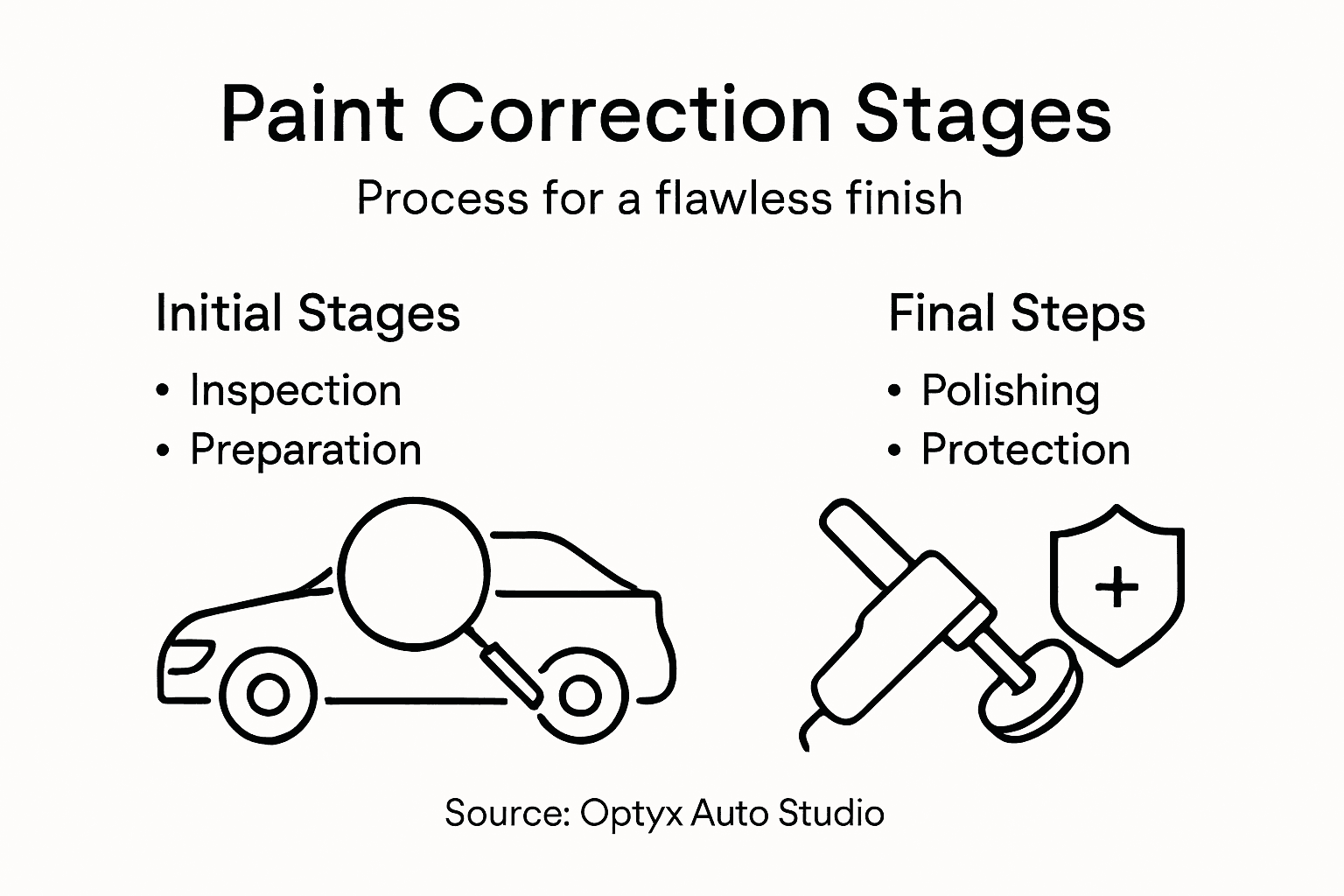
Paint correction follows a methodical progression rather than a one-step process. Skipping stages or rushing through them compromises results and risks damaging your luxury vehicle’s finish. The first stage is thorough surface cleaning, which removes loose contaminants, dirt, and debris. Your technician washes the vehicle with specialized automotive soap, then performs a clay bar treatment to pull embedded fallout particles from the paint surface. This step is crucial because any remaining contaminant will scratch your paint during polishing. Many people underestimate its importance, but this preparation work directly affects the quality of everything that follows. Once the surface is genuinely clean, the technician moves to defect assessment. Using raking lights and paint thickness gauges, they examine every panel to map out where defects exist, how deep they penetrate, and how much clearcoat is available to work with. This assessment determines which techniques and compounds will be used on each section of the vehicle. A professional doesn’t use the same approach on every panel because different areas have different damage profiles.
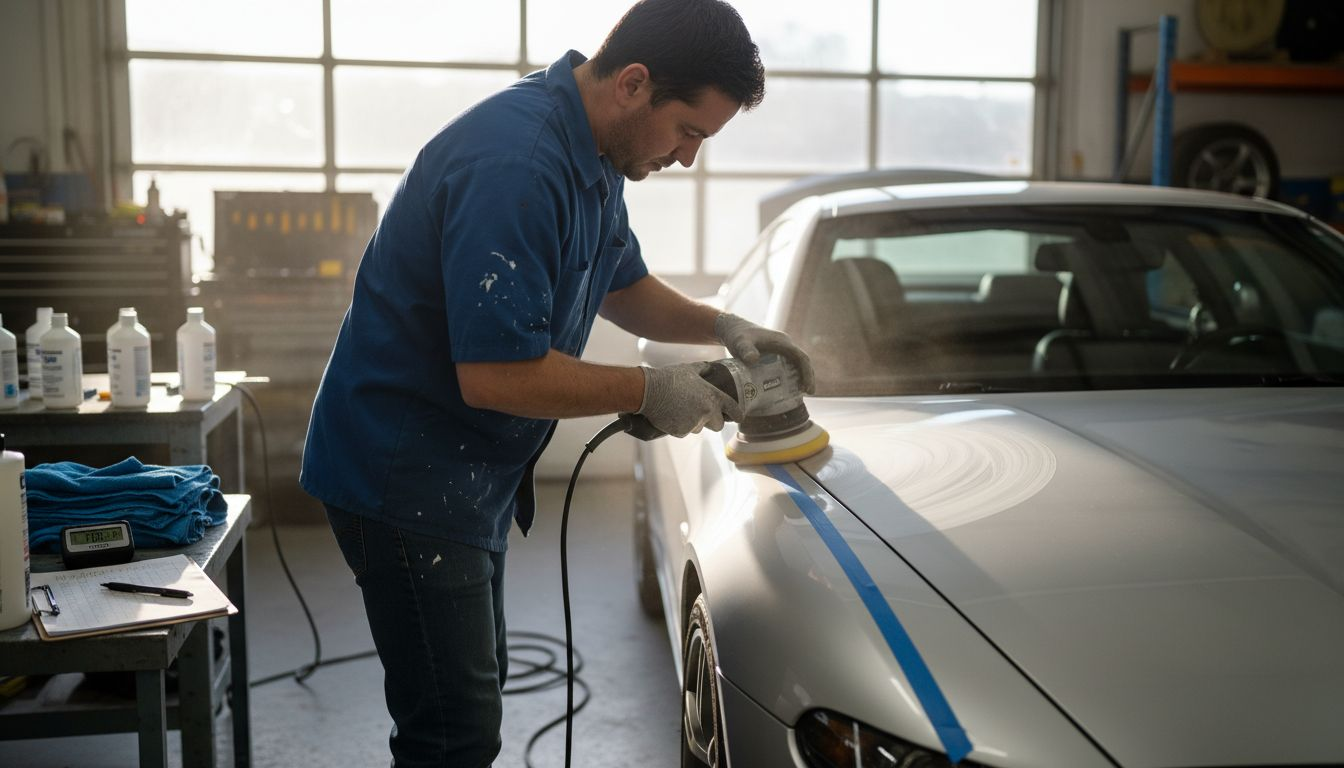
The actual correction work happens in the polishing stages, which progress from aggressive to refined. The compound polishing stage uses a dual-action or rotary polisher with heavier cut compounds to remove scratches, oxidation, and swirls. Paint correction techniques involve various pad and compound combinations tailored to the specific paint system and defect severity. A dual-action polisher moves in two directions simultaneously, making it safer for novices but slower for heavy correction work. A rotary polisher spins in one direction only and requires more skill to control but can address severe defects more efficiently. Your technician selects based on your paint’s condition and the severity of imperfections. During this stage, paint thickness measurements are taken repeatedly to ensure safe removal of material. The finishing polishing stage follows, using finer compounds and pads to restore gloss and remove any haze left by heavier compounds. This is where the paint truly transforms, shifting from corrected to brilliant. The difference between a good correction and an exceptional one often comes down to how much attention is paid to this finishing stage.
The final stage involves protection application, which seals and preserves the corrected finish. Some technicians apply protective wax or sealants, though at Optyx Auto Studio, we typically recommend ceramic coatings for luxury vehicles because they provide superior durability and protection compared to traditional wax. The corrected paint provides an ideal base for ceramic coating application because all contaminants and imperfections have been removed, allowing the coating to bond uniformly and provide optimal water beading and chemical resistance. The entire process for a comprehensive correction on a luxury vehicle typically spans 6 to 16 hours depending on paint condition and vehicle size. This timeline reflects the reality that quality paint correction cannot be rushed. Each stage builds on the previous one, and cutting corners at any point undermines the final result. For Spokane vehicle owners, understanding these stages helps you appreciate why professional paint correction represents a genuine investment in your vehicle’s appearance and long-term paint health.
Understanding Polisher Types and Their Applications
The choice between polishing equipment types significantly impacts results. Dual-action polishers are forgiving and ideal for vehicles with moderate damage, while rotary polishers deliver faster, more aggressive correction for severe paint problems. Your technician’s experience with both types ensures they select the right tool for your specific situation.
Pro tip: Ask your paint correction technician to show you before and after photos of similar vehicles they have corrected, specifically looking for consistency of finish gloss and absence of haze marks, which indicate skilled technique throughout all correction stages.
Professional-Grade Standards vs DIY Options
The gap between professional paint correction and DIY attempts is wider than most luxury vehicle owners realize. When you purchase a high-end car, you’re investing in precision engineering and premium finishes applied under controlled factory conditions. Attempting correction at home introduces variables that professionals eliminate through years of training and specialized equipment. Professional paint correction facilities operate under strict standards designed to protect your investment. Technicians use calibrated equipment and approved compounds that meet industry specifications for consistency and safety. They measure paint thickness constantly, work in climate-controlled environments, and follow documented procedures. A professional has invested thousands of dollars in dual-action polishers, rotary machines, laser measuring devices, and proprietary compound formulations. They’ve also invested hundreds of hours mastering technique. When something goes wrong, a professional carries liability insurance and warranty protection. When your DIY attempt goes wrong, you own the consequences.
DIY paint correction tempts many owners because basic tools and compounds are available at retail stores. You can purchase a polisher, grab some compound, and attempt to fix minor scratches on your own. For genuinely minor surface blemishes, this sometimes works. For anything requiring genuine correction work, it fails spectacularly. Here’s why. First, retail compounds are formulated for general use, not for the specific paint systems on luxury vehicles. Your BMW, Mercedes, or Porsche has a proprietary clearcoat formulation that responds differently to different compounds than a standard economy car would. Second, most DIY enthusiasts lack paint thickness measurement tools, so they have no way of knowing when they’ve removed too much clearcoat. You can’t see the damage until it’s too late. Third, polishing technique matters enormously. Even small variations in pad pressure, angle, and speed create uneven results that become visible under sunlight. Professional technicians develop muscle memory through thousands of hours of practice. You don’t develop that in an afternoon. The risk is substantial. A two-minute mistake during a DIY attempt can require a professional repaint costing thousands of dollars to repair.
Consider the math from a practical standpoint. A professional paint correction ranges from $800 to $3,500 depending on vehicle size and paint condition. A single mistake during DIY work can cost $2,000 to $5,000 in repainting to fix. A Spokane luxury vehicle owner might invest in DIY to save $1,500, only to create damage requiring a $3,000 repair. That’s a net loss of $1,500 plus the stress and downtime. Professional services provide documentation of what was corrected, before and after photos, and often include warranty protection. If ceramic coating or paint protection film is applied afterward, it bonds better to professionally corrected paint because the surface is genuinely clean and uniformly treated. DIY-corrected paint may have invisible residue or uneven compound layers that compromise coating adhesion. For luxury vehicles, the better choice is always professional correction. The cost difference is minimal compared to your vehicle’s value, and the results protect that value instead of risking it.
The following table compares professional vs. DIY paint correction approaches:
Aspect | Professional Correction | DIY Correction |
Equipment | Specialized polishers, gauges | Consumer-grade tools |
Technique | Experienced, industry-trained | Self-taught, less consistent |
Paint Safety | Thickness measured constantly | Thickness usually unknown |
Warranty/Guarantee | Usually included | None, owner assumes all risk |
Long-term Result | Uniform, value-preserving finish | Higher risk of visible defects |
Why Professional Standards Exist
Industry standards exist because the consequences of poor paint work are serious. Vehicles with compromised clearcoat lose protection against UV damage, chemical fallout, and oxidation. The paint fails faster, and repair costs escalate. Professional standards protect both the technician and the vehicle owner by ensuring consistent, safe practices.
Pro tip: Before choosing between DIY and professional services, get a free assessment from a professional technician who can show you exactly what your paint condition is and explain specifically why professional correction is necessary for your vehicle, rather than making assumptions based on what you see in sunlight.
Costs, Risks, and Value Preservation Factors
Paint correction on a luxury vehicle represents an investment, not an expense. Understanding the cost structure helps you recognize why professional correction delivers genuine value. A basic single stage correction for a luxury sedan typically ranges from $800 to $1,500. A more comprehensive two stage correction addressing deeper scratches and oxidation runs $1,500 to $2,500. A full multi stage correction for severely damaged paint can reach $3,000 to $4,000 or higher depending on vehicle size and condition. These numbers sound substantial until you consider what’s at stake. A luxury vehicle that cost $60,000 to $150,000 new suffers significant value erosion if the paint shows obvious swirls, scratches, and oxidation when potential buyers inspect it. A $2,000 correction investment protects a $10,000 to $20,000 resale value difference. The math is simple: correction costs a fraction of what damaged paint costs you in lost value. For Spokane vehicle owners, this calculation becomes even more important because our climate accelerates paint degradation. Winter salt exposure combined with intense summer UV means your luxury paint suffers year round without proper protection and maintenance.
The risks of skipping correction or using improper techniques are equally straightforward. When clear coat becomes too thin from aggressive polishing, it can no longer protect the color layer beneath. UV exposure then degrades the base paint directly, leading to fading and chalking. Paint begins to oxidize faster, color mismatches appear if you need spot repairs, and rust protection is compromised. A vehicle that could have looked pristine for years deteriorates noticeably within months. You also risk creating uneven finishes where correction work was performed unevenly. Some panels might have glossy correction while others remain dull, creating a patchwork appearance particularly visible in sunlight. Once this happens, you cannot uncorrect the paint. The only solution is professional repainting of affected panels, which costs considerably more than the original correction would have. Paint durability and appearance are critical to preserving luxury vehicle value, which industry testing standards emphasize through resistance to environmental damage, corrosion, and fading. Improper correction undermines all of that protection. A properly corrected paint surface prepared according to professional standards maintains its protective properties and aesthetic appeal for years, while incorrectly corrected paint deteriorates rapidly and requires expensive remediation.
Value preservation extends beyond resale considerations. Your luxury vehicle is used. You drive it. Paint correction restores its appearance to near original condition, which means you actually enjoy the vehicle more. You stop noticing those swirls in morning sunlight. The car looks like you take pride in ownership, which influences how you feel about the vehicle and how others perceive your attention to detail. When ceramic coating or paint protection film is applied after professional correction, that protection is significantly more effective because it bonds to genuinely clean, uniform paint rather than contaminated or unevenly corrected surfaces. A ceramic coating on professionally corrected paint lasts 3 to 5 years with proper maintenance. The same coating applied over flawed paint might last 18 months before bonding failure or spotting issues emerge. You end up reapplying protection more frequently, which costs more money over time. The decision between professional correction and DIY or skipping it entirely has compound effects. Professional correction costs money today but preserves both your vehicle’s market value and the effectiveness of any protective treatments you apply. Neglecting correction costs nothing today but erodes value continuously and reduces protection effectiveness. For luxury vehicle owners who plan to keep their cars beyond the warranty period, professional paint correction becomes increasingly important because compound effects of proper maintenance significantly impact long term ownership costs and enjoyment.
Making the Financial Case
Consider a five year ownership scenario. A luxury vehicle with properly corrected and protected paint retains 8 to 12 percent more resale value than one with visibly compromised paint. On a vehicle worth $50,000 at resale, that represents $4,000 to $6,000 in preserved value. A $2,000 correction investment paired with a $1,200 ceramic coating investment delivers $6,000 in value preservation. That is a positive return on investment before even considering the enjoyment factor of driving a vehicle that looks pristine.
Pro tip: Request a detailed written estimate before correction work begins that specifies exactly what will be corrected, the correction stages planned, paint thickness measurements, and the warranty provided on the work, so you have clear documentation of what was delivered and proof for future vehicle sales or insurance purposes.
Elevate Your Luxury Vehicle’s Shine with Expert Paint Correction
Luxury vehicles demand precision care to restore and preserve their flawless finish. The challenges of swirl marks, scratches, oxidation, and clearcoat thinning mentioned in the article highlight the need for meticulous paint correction combined with advanced protective solutions. At Optyx Auto Studio, we understand that correcting paint imperfections is only the first step to truly transforming your vehicle’s aesthetics while safeguarding its value against harsh elements and everyday wear.
Experience the difference when expert paint correction meets industry-leading ceramic coatings and paint protection film. Our certified installers use specialized techniques that respect your vehicle’s unique paint structure and thickness. By choosing Optyx, you not only remove damaging defects but also create the perfect surface to maximize the longevity and effectiveness of premium protection systems.
Looking to enhance and protect your investment with precision and care
Discover top-tier paint correction and premium protective services at Optyx Auto Studio. Don’t wait for paint defects to worsen or risk costly damage through improper DIY attempts. Schedule your professional consultation today and let us reveal the true brilliance of your luxury vehicle while extending its beauty for years to come. Learn more about our full range of advanced automotive restyling and protection options here.
Frequently Asked Questions
What is paint correction for luxury vehicles?
Paint correction is the process of restoring a luxury vehicle’s paint finish by removing or reducing surface imperfections like scratches, swirls, and oxidation. Unlike simple washing and waxing, it addresses the paint layer itself to reveal a pristine finish.
How long does professional paint correction take?
The duration of professional paint correction can vary but typically takes between 6 to 16 hours, depending on the vehicle’s size and the severity of the imperfections.
Can I perform paint correction on my luxury vehicle myself?
While basic cleaning can be done at home, paint correction requires specialized knowledge and equipment to prevent damage to the paint. DIY attempts often lack the precision required and can lead to costly mistakes like removing too much clear coat.
What are common defects that paint correction addresses?
Common paint defects include swirl marks, scratches, water spots, orange peel texture, and oxidation. Each type of defect requires a different approach for effective correction.
Recommended


Comments